
I stumbled on a St. Patrick’s Day staple that became my go-to 4 Ingredient Bread Recipe, and I’m excited to share the simple trick that makes it so dependable.
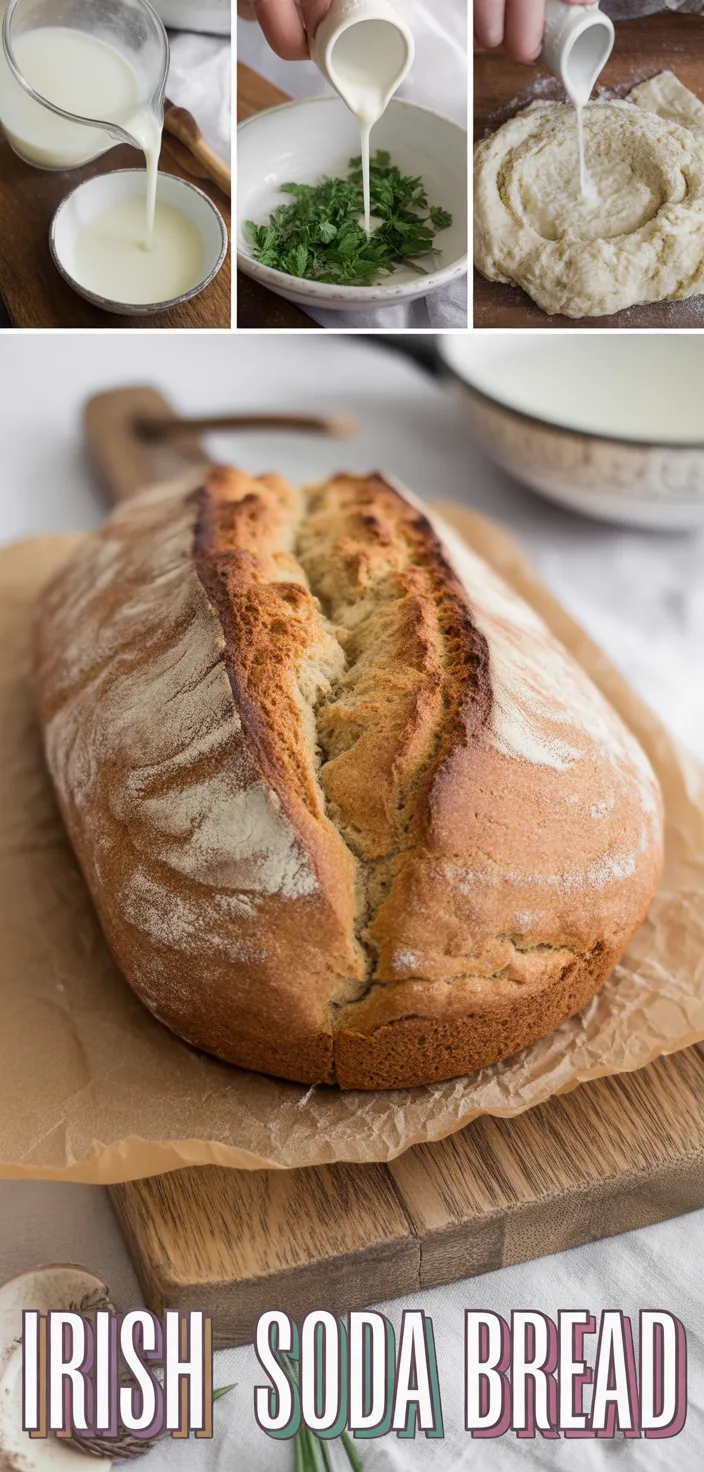
I make this St. Patrick’s Day Irish Soda Bread every year, and somehow it never gets boring.
It’s the kind of Quick Irish Soda Bread that fools people into thinking you spent hours in the kitchen. With nothing fancy, just all purpose flour and buttermilk, the loaf gets a crisp crust and a tender crumb that begs for another slice.
It’s basically a 4 Ingredient Bread Recipe but the payoff is bigger than the effort, honestly. Try it once and you’ll start wondering why you ever thought baking needed yeast, I still can’t explain how simple it feels yet so right.
Ingredients
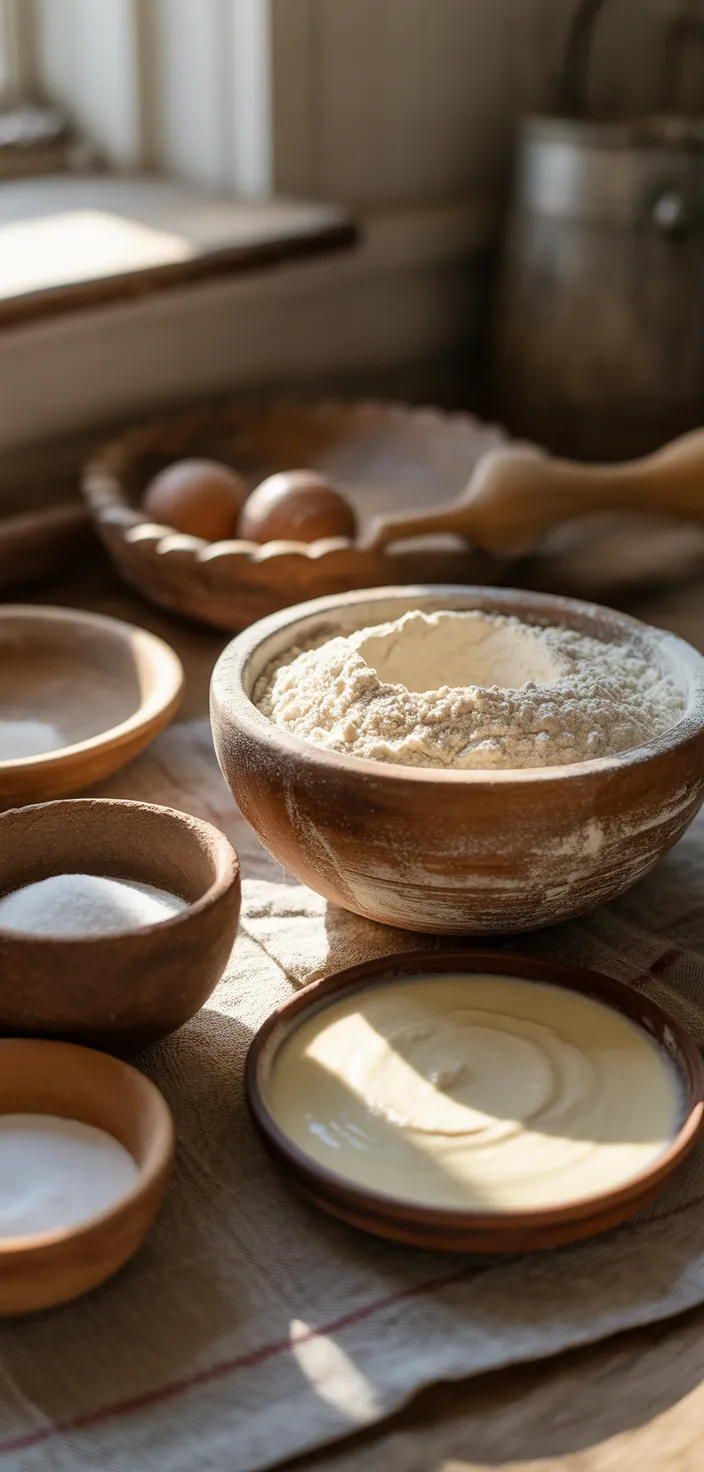
- All purpose flour: mainly carbohydrates, some protein for structure, low fibre unless whole grain.
- Buttermilk: tangy mildly sour, adds moisture, protein, calcium, reacts with baking soda for lift.
- Baking soda: pure chemical leavening, no calories, reacts with acid to make CO2 and rise.
- Salt: intensifies flavors, controls dough behavior, tiny sodium amount so use sparingly.
- Whole grain option: boosts fibre and nutrients but makes loaf denser, needs more liquid.
- Protein (gluten) gives chew and structure, overworking dough makes loaf too tough.
- Flavor: buttermilk tang and salt balance each other, bread is savory not sweet.
Ingredient Quantities
- 4 cups all purpose flour (about 480 g)
- 1 tsp baking soda
- 1 tsp salt
- 1 3/4 cups buttermilk (about 420 ml)
How to Make this
1. Preheat oven to 425°F (220°C) and if you like set a baking sheet or cast iron pan in the oven to heat while you mix, it gives a better crust.
2. In a large bowl combine 4 cups all purpose flour (about 480 g), 1 tsp baking soda and 1 tsp salt; stir or whisk to evenly distribute. Tip: measure flour by spooning into the cup and leveling or just use the weight.
3. Make a well in the dry mixture and pour in 1 3/4 cups buttermilk (about 420 ml). Stir with a wooden spoon until the dough just comes together. It will be shaggy and slightly sticky, dont overmix or it gets tough.
4. Turn the dough onto a lightly floured surface and gently fold it a few times to form a rough round. Use only as much extra flour as needed to handle it.
5. Shape into a round loaf about 1 1/2 to 2 inches thick and transfer to the hot or room temperature baking sheet. Pat the top and sides smooth but dont press out all the air.
6. Use a sharp knife to cut a deep cross in the top about 1/4 to 1/2 inch deep. This helps the loaf cook through and is traditional.
7. If you want more color brush the top lightly with a little extra buttermilk. Bake on the middle rack for 30 to 40 minutes until the crust is deep golden and the loaf sounds hollow when tapped. If you use a thermometer the center should be about 200°F (93°C).
8. Let cool on a wire rack at least 15 minutes before slicing so the crumb sets. Soda bread is best the same day, but you can toast leftover slices.
Equipment Needed
1. Oven set to 425°F (220°C)
2. Large mixing bowl for the flour, soda and salt
3. Measuring cups and spoons, or a kitchen scale for more accurate flour weights
4. Wooden spoon to stir the shaggy dough, dont overmix it
5. Lightly floured work surface or pastry board to fold and shape the loaf
6. Baking sheet or a preheated cast iron pan to bake the bread
7. Sharp knife to score a deep cross on top
8. Pastry brush (optional) to brush extra buttermilk for color, or just use your fingers
9. Wire cooling rack so the loaf can rest and the crumb sets
10. Instant read thermometer (optional) to check for about 200°F (93°C) in the center
FAQ
St. Patrick’s Day Irish Soda Bread Recipe Substitutions and Variations
- All purpose flour: swap in whole wheat flour but try using only half whole wheat and half AP for best texture; if you go 100% whole wheat expect a denser loaf and you might need to add 1 tablespoon more liquid.
- Baking soda: no soda on hand? Use 4 teaspoons baking powder for 1 teaspoon baking soda, note the bread will be less tangy since baking powder already has acid in it.
- Buttermilk: make a quick buttermilk by stirring 1 tablespoon white vinegar or lemon juice into 1 cup milk, let sit 5 minutes then use 1 3/4 cups total; or use plain yogurt thinned with milk using 3/4 cup yogurt plus 1/4 cup milk per cup.
- Salt: fine sea salt or table salt swap 1:1 for 1 teaspoon; if using kosher salt you’ll need more about 1 1/4 to 1 1/2 teaspoons depending on the brand because the crystals are larger.
Pro Tips
1. Preheat a heavy pan or baking sheet in the oven before you put the dough on it, it really helps the bottom get crisp and gives better oven spring, but dont leave it so long it starts smoking so keep an eye on the oven.
2. Weigh the flour if you can, spooning and leveling is ok too, packed cups will make the loaf dense; also use as little extra flour as possible when shaping so the crumb stays tender.
3. Mix just until the dough comes together and bake right away, the baking soda starts working as soon as it meets the buttermilk so waiting or overmixing will kill the lift and make the bread tough.
4. Use an instant‑read thermometer to check the center (about 200°F / 93°C) or tap the bottom to hear a hollow sound, and let it rest on a rack at least 15 minutes so the crumb sets before you slice it, otherwise its gummy.
St. Patrick's Day Irish Soda Bread Recipe
I stumbled on a St. Patrick's Day staple that became my go-to 4 Ingredient Bread Recipe, and I'm excited to share the simple trick that makes it so dependable.
12
servings
160
kcal
Equipment: 1. Oven set to 425°F (220°C)
2. Large mixing bowl for the flour, soda and salt
3. Measuring cups and spoons, or a kitchen scale for more accurate flour weights
4. Wooden spoon to stir the shaggy dough, dont overmix it
5. Lightly floured work surface or pastry board to fold and shape the loaf
6. Baking sheet or a preheated cast iron pan to bake the bread
7. Sharp knife to score a deep cross on top
8. Pastry brush (optional) to brush extra buttermilk for color, or just use your fingers
9. Wire cooling rack so the loaf can rest and the crumb sets
10. Instant read thermometer (optional) to check for about 200°F (93°C) in the center
Ingredients
-
4 cups all purpose flour (about 480 g)
-
1 tsp baking soda
-
1 tsp salt
-
1 3/4 cups buttermilk (about 420 ml)
Directions
- Preheat oven to 425°F (220°C) and if you like set a baking sheet or cast iron pan in the oven to heat while you mix, it gives a better crust.
- In a large bowl combine 4 cups all purpose flour (about 480 g), 1 tsp baking soda and 1 tsp salt; stir or whisk to evenly distribute. Tip: measure flour by spooning into the cup and leveling or just use the weight.
- Make a well in the dry mixture and pour in 1 3/4 cups buttermilk (about 420 ml). Stir with a wooden spoon until the dough just comes together. It will be shaggy and slightly sticky, dont overmix or it gets tough.
- Turn the dough onto a lightly floured surface and gently fold it a few times to form a rough round. Use only as much extra flour as needed to handle it.
- Shape into a round loaf about 1 1/2 to 2 inches thick and transfer to the hot or room temperature baking sheet. Pat the top and sides smooth but dont press out all the air.
- Use a sharp knife to cut a deep cross in the top about 1/4 to 1/2 inch deep. This helps the loaf cook through and is traditional.
- If you want more color brush the top lightly with a little extra buttermilk. Bake on the middle rack for 30 to 40 minutes until the crust is deep golden and the loaf sounds hollow when tapped. If you use a thermometer the center should be about 200°F (93°C).
- Let cool on a wire rack at least 15 minutes before slicing so the crumb sets. Soda bread is best the same day, but you can toast leftover slices.
Notes
- Below you’ll find my best estimate of this recipe’s nutrition facts. Treat the numbers as a guide rather than a rule—great food should nourish both body and spirit. Figures are approximate, and the website owner assumes no liability for any inaccuracies in this recipe.
Nutrition Facts
- Serving Size: 75.5g
- Total number of serves: 12
- Calories: 160kcal
- Fat: 0.9g
- Saturated Fat: 0.37g
- Trans Fat: 0g
- Polyunsaturated: 0.14g
- Monounsaturated: 0.17g
- Cholesterol: 3.5mg
- Sodium: 348mg
- Potassium: 95mg
- Carbohydrates: 32.2g
- Fiber: 1.08g
- Sugar: 1.8g
- Protein: 5.16g
- Vitamin A: 21IU
- Vitamin C: 0mg
- Calcium: 53.1mg
- Iron: 0.52mg